
Apicoectomy—An Overview Of Endodontic Surgery
Generally, a root canal is all that is needed to save teeth with an injured pulp from extraction. Very rarely however, nonsurgical root canal treatment is not enough to heal the tooth and your endodontist may recommend root-end surgery.
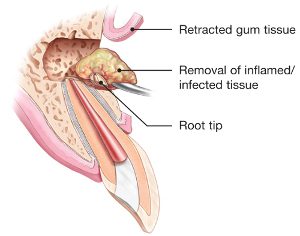
Why would I need Endodontic Surgery?
Sometimes patients need more than a root canal to fully save a tooth from extraction. Our endodontists perform apicoectomies right here in our office. The procedure, also known as endodontic surgery and root-end resection, is an option to find fractures and hidden canals that don't show up on x-rays. These hidden problems can lead to persistent pain with the tooth and need to be addressed. The doctors can also treat damaged root surfaces and the surrounding bone with an apicoectomy.
Click here for the high-reversion
What is an Apicoectomy?
The procedure begins with the endodontist making an incision in the gum tissue in order to work on the bone and inflamed tissue surrounding it. Next, the damaged section is removed along with the root tip. Lastly, a root-end filling is placed to protect the root and prevent reinfection. The doctor closes up the incision with sutures. Over the next few months, the bone heals naturally. Once it's completely healed, the tooth is fully functional again.
To see an example of the process, we’ve included a video for you to watch on this page.
After the apicoectomy, patients may experience swelling and discomfort along the incision area. Although unpleasant, it's common. Your endodontist will recommend medication to take following the procedure. If you experience any significant pain or swelling, or have any questions or concerns, do not hesitate to reach out to us at (317) 846-4980.